

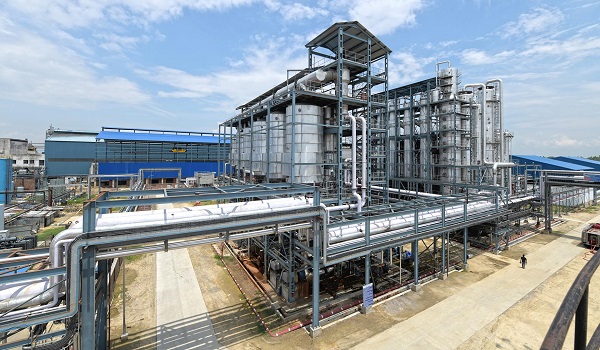
Spray Engineering Devices Limited (SED) has secured a turnkey contract to establish what is being described as the world’s first boilerless greenfield standalone sugar refinery at Kandla, Gujarat. The proposed facility, with a capacity of 1,000–1,500 tonnes per day (TPD), is scheduled for completion by March 31, 2027.
Strategically located close to major export corridors, the refinery will operate entirely on renewable energy sources, including solar and wind power. It has been designed to function with zero water consumption and zero carbon emissions. The project also includes a long-term Operations and Maintenance (O&M) agreement to ensure sustained performance and operational efficiency after commissioning.
According to the company, the plant will incorporate closed-loop moisture recovery systems to achieve zero water usage, along with integrated lime recalcination technology that enables internal recovery and reuse of lime, significantly reducing solid waste generation. The refinery is expected to deliver a sugar recovery rate of 99% and produce export-grade refined sugar below 15 ICUMSA, while processing high-colour raw sugar of up to 1,200 ICUMSA.
Vivek Verma, Managing Director of SED, said the project demonstrates that industrial growth can be achieved without environmental degradation. He added that the refinery’s circular engineering model establishes a new sustainability benchmark for the global sugar industry.
The project is being developed in collaboration with Fullon Sugar Private Limited. Pravin Kumar Shishodiya, Managing Director of Fullon Sugar, said the partnership aims to set a global standard for sustainable sugar refining while strengthening India’s position in green manufacturing.
The plant’s projected energy consumption stands at approximately 70 kWh per tonne of sugar, with lime usage restricted to about 1 kg per tonne through recalcination. Designed to serve both domestic and export markets, the refinery aligns with India’s 2070 Net Zero objectives and reflects the growing shift toward sustainable industrial infrastructure.