

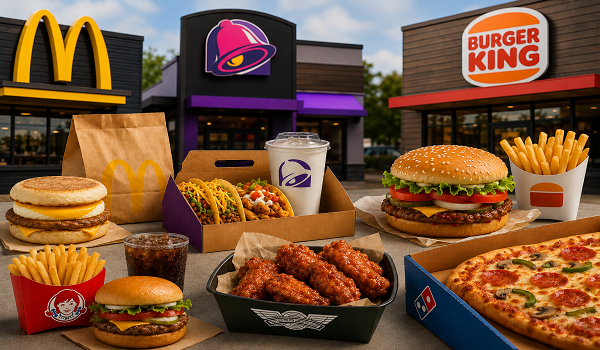
For US fast-food chains, the era when simply offering a cheaper meal could guarantee more customers appears to be fading.
McDonald’s and several of its rivals spent the second quarter leaning heavily on value deals to attract inflation-weary consumers. But the latest results suggest that discounts alone are no longer enough. The chains seeing the strongest gains are combining competitive prices with menu innovation, better food quality and a more seamless customer experience.
Taco Bell has emerged as one of the clearest examples. The Yum Brands chain reported a 7% increase in same-store sales during the quarter, helped by its $5, $7 and $9 meal boxes. At the same time, the brand continued rolling out new menu items designed to encourage customers to spend beyond its entry-level offers.
The lesson for the industry is increasingly clear: consumers want value, but they are becoming more selective about what that value delivers.
“Value” works best when it is simple, transparent and does not leave customers feeling they were drawn in by a deal only to pay more at checkout, according to Rachel Royster, director of strategic planning and innovation at foodservice consultancy Connections.
McDonald’s struggles to convert value into traffic
McDonald’s, despite expanding its value offerings, delivered a more muted performance. Global comparable sales increased 1.3% during the quarter, even as the company promoted an under-$3 menu and a $4 breakfast meal.
CEO Chris Kempczinski said loyal customers accounted for roughly two-thirds of the traffic shortfall, pointing instead to execution challenges rather than a fundamental flaw in the chain’s strategy.
Other chains also found that promotions were not enough to overcome pressure on lower-income consumers.
Wendy’s, whose Biggie Bag value meals start at $5, reported a 7% decline in US same-restaurant sales and withdrew its annual forecast. Wingstop posted a 7.5% drop in US same-store sales, despite promotions including $1 wings.
The contrast was particularly striking at Wingstop: visits increased by as much as 9% in higher-income markets, while sales weakened in urban areas where households were facing greater financial pressure.
Burger King takes a different approach
Burger King was among the quarter’s stronger performers, with executives crediting promotions such as its “2 for $5” and “3 for $7” offers alongside broader improvements in restaurant operations and menu quality.
Rather than relying on deep, permanent discounts, the chain has focused on making its promotions more targeted and creative.
Domino’s also benefited from value-oriented offerings and loyalty programmes that helped support traffic and sales. Chipotle, meanwhile, delivered strong results while keeping price increases relatively modest at around 1% to 2%.
Chipotle CEO Scott Boatwright summed up the changing equation: value is no longer simply about the lowest price. Convenience, execution and menu innovation are increasingly part of what customers consider when deciding where to eat.
For the fast-food industry, that could mark a significant shift. After two years in which inflation pushed consumers toward promotions and value meals, the next phase may be less about who can offer the cheapest deal—and more about who can make that deal feel worth choosing.