

India’s summer crop sowing for the 2026 season has reached 36.22 lakh hectares, according to data released by the Ministry of Agriculture and Farmers Welfare. While this is slightly lower than last year’s 37.25 lakh hectares for the same period, key crops like pulses and millets have recorded notable growth.
A major highlight is the expansion in pulses cultivation, which has increased to 2.25 lakh hectares from 1.74 lakh hectares last year. The growth is largely driven by Green Gram (Moong), now covering 1.33 lakh hectares, and Black Gram (Urad) at 0.71 lakh hectares. This trend aligns with the government’s focus on boosting domestic production and improving nutritional security.
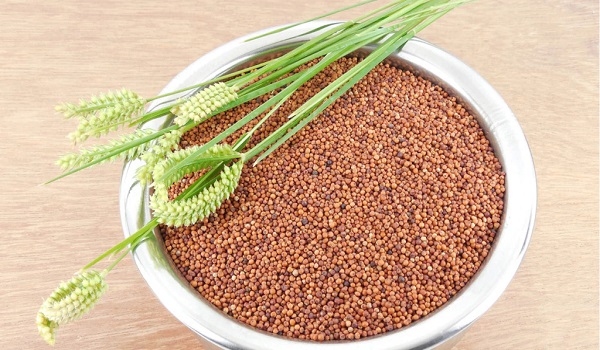
Among coarse cereals, classified as “Shree Anna,” the total coverage stands at 4.14 lakh hectares. Notably, Ragi has shown a strong percentage increase, rising to 0.19 lakh hectares from 0.11 lakh hectares last year. However, crops like maize and bajra have seen a slight dip.
Rice continues to dominate summer sowing with 26.75 lakh hectares, though this marks a decline of about 1.22 lakh hectares compared to the previous year.
In the oilseeds segment, sowing remains stable at 3.08 lakh hectares. Groundnut leads with 2.00 lakh hectares, followed by sesamum and sunflower.
The ministry continues to monitor sowing patterns closely to assess water availability and climatic conditions. With the normal summer cropping area estimated at 75.37 lakh hectares, the current progress indicates a steady start, alongside a gradual shift toward high-value, climate-resilient crops like pulses and millets.