

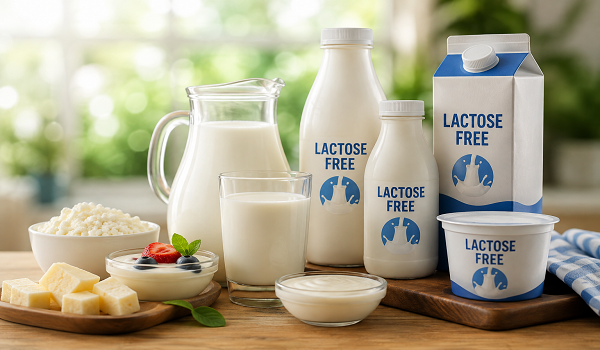
Once considered a niche product for consumers with digestive concerns, lactose-free dairy is emerging as a promising value-added segment in India, supported by rising health awareness, premiumisation and advances in dairy processing and packaging.
Milk has long been central to Indian diets, yet a significant proportion of consumers have difficulty digesting lactose. A 2015 study by the Sanjay Gandhi Post Graduate Institute of Medical Sciences (SGPGI) estimated that 60–74% of Indians are lactose malabsorbers. For dairy companies, this large potential consumer base is increasingly being viewed as a market opportunity.
“Lactose-free dairy has moved well past niche status; it’s one of the fastest-growing segments in Indian dairy today,” said Thapasya Vijayaraghavan, Co-Founder and CEO of Beanery Foods.
The category is also moving beyond consumers specifically seeking relief from lactose intolerance. Brands are increasingly positioning lactose-free dairy around easier digestion, nutrition, wellness and convenience.
“In India, lactose-free milk is moving beyond a narrow ‘intolerance-only’ conversation,” said Saurabh Sinha, Marketing Director at Tetra Pak. Consumers, he said, are looking for dairy that combines familiar taste and nutrition with easier digestion and modern wellness benefits.
Globally, the lactose-free milk market is projected to grow from about $13.8 billion to $21.6 billion by 2031, at more than 9% annually. In India, the segment is forecast to expand at around 7% CAGR through 2027, with milk remaining the largest sub-category.
For dairy companies competing in conventional milk and other increasingly commoditised categories, lactose-free products also provide an opportunity for differentiation and premium pricing. The potential extends into high-protein dairy, fortified milk, flavoured beverages, milkshakes, yoghurt, paneer and specialised nutrition.
Vijayaraghavan noted that lactose-free, organic and fortified products together remain under-penetrated, accounting for below 4% of the broader Indian dairy market.
Growing adoption outside homes could further accelerate the segment. Siddharth Runwal, CEO of Provilac, said the company introduced fresh lactose-free milk following repeated customer requests and subsequently saw demand grow rapidly, including from cafés.
Processing technology is also making lactose-free dairy easier to scale. Controlled lactase dosing breaks lactose into glucose and galactose while retaining milk’s protein, calcium and other core nutrients. The process also explains the product’s naturally sweeter taste without necessarily requiring added sugar.
UHT processing and aseptic packaging can provide longer ambient shelf life, helping manufacturers reduce wastage and distribute specialised products beyond major metros. Single-serve and on-the-go formats could further broaden consumption occasions.
Importantly, lactose-free dairy fits easily into familiar Indian habits. It can be consumed in chai and coffee or used in smoothies, kheer, payasam, phirni, custards and milkshakes without requiring consumers to abandon dairy.
With a large potential consumer base, greater awareness of digestive wellness and improving processing capabilities, lactose-free dairy could become an important value-added growth frontier for India’s dairy industry. The challenge now is moving the category from specialised shelves into the mainstream dairy basket.