

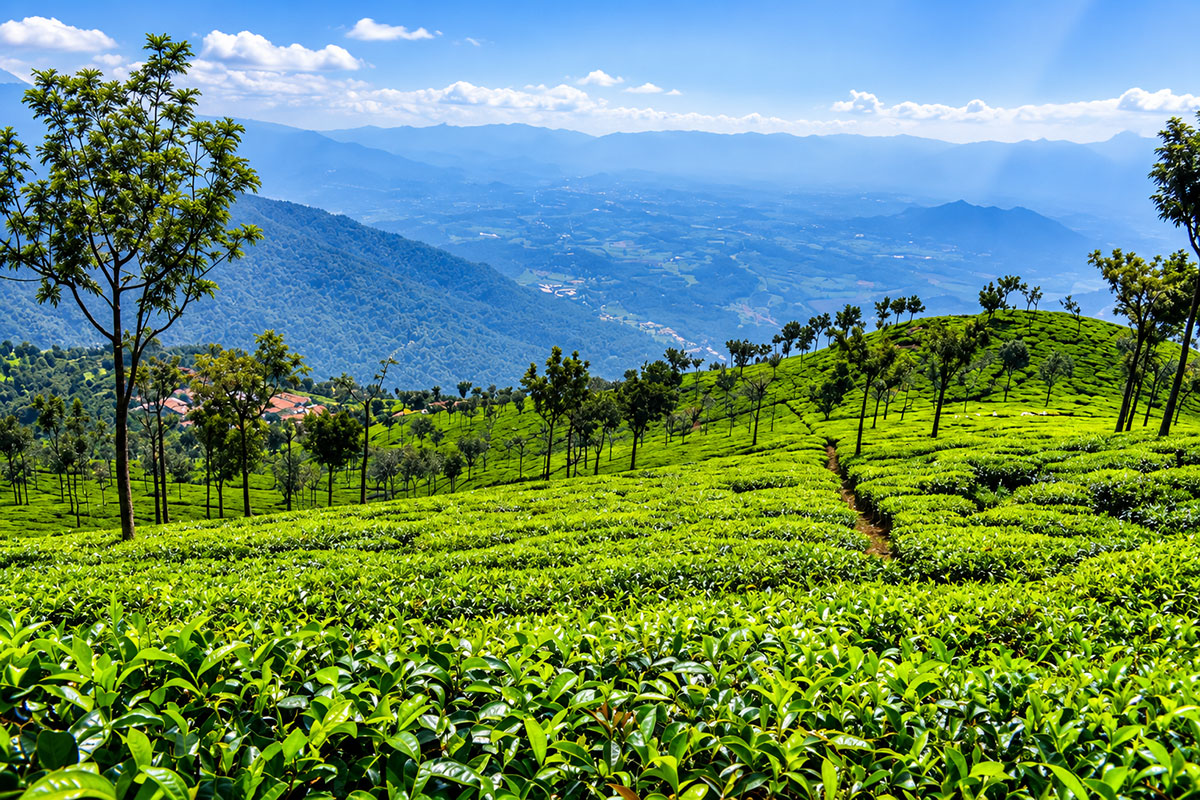
Prolonged dry conditions and a severe rainfall deficit are putting increasing pressure on the tea industry in Tamil Nadu’s Nilgiris district, reducing green leaf availability, lowering factory production and threatening the livelihoods of thousands of small growers.
Tea plantations across Ooty, Coonoor, Kotagiri and Manjoor are being affected as extended dry spells and El Niño-linked weather conditions cause tender tea shoots to wither. The shortage has emerged during what is normally an important growing period, when favourable weather supports the development of fresh shoots.
More than 65,000 small and marginal farmers are engaged in tea cultivation in the Nilgiris, making the crop an important source of income and employment across the region. Many growers were already seeking better prices for green tea leaves, and the latest weather-related decline in production has added to their financial pressure.
Data from the UPASI Tea Research Institute indicates a longer-term decline in rainfall. Average rainfall in the Nilgiris fell from 173.3 cm in 2021 to 119.4 cm in 2025, a drop of about 31%. Productivity has also weakened, with tea output per hectare declining from 2,315 kg in 2023 to 2,042 kg in 2025.
Conditions have become particularly difficult during the current Southwest Monsoon. Against normal rainfall of around 874 mm, the Nilgiris has reportedly received only about 283 mm, resulting in a rainfall deficit of around 55%, described as the region’s largest in 15 years.
The shortage of green leaves is now directly affecting tea processing factories. Some units that previously received around 4,000 kg of leaves daily are reportedly getting only about 600 kg. Factory representatives say facilities generally require between 4,000 kg and 8,000 kg of green leaves per day to maintain normal operations, while current arrivals at some units have fallen to just 600–800 kg.
Tea production across the region is estimated to have declined by 10–20%, and industry representatives fear losses could deepen if dry conditions continue. At one factory, production was reported at around 400,000 kg by early September, compared with approximately 500,000 kg during the same period last year.
Farmers and industry representatives are now seeking assistance from the Tamil Nadu government for small growers and agricultural workers affected by the drought. Water scarcity has further increased costs, with some farming communities reportedly having to purchase water to protect their crops.
A prolonged shortage could also affect tea supplies and exports. Tea Board of India data shows that while the country’s overall tea exports increased to 257.88 million kg in 2024-25, exports from South India declined 4.92% to 96.68 million kg.
Scientists have cautioned that rainfall distribution is becoming as important as total rainfall. Intense rain over short periods followed by prolonged dry spells can damage young shoots, while higher temperatures increase moisture stress. Temperatures in the Nilgiris have reportedly risen by around 0.5°C, increasing the need for measures such as shade trees to protect plantations.
If rainfall does not improve, what began as a seasonal production decline could develop into a wider supply and livelihood challenge for one of South India’s most important tea-growing regions.