

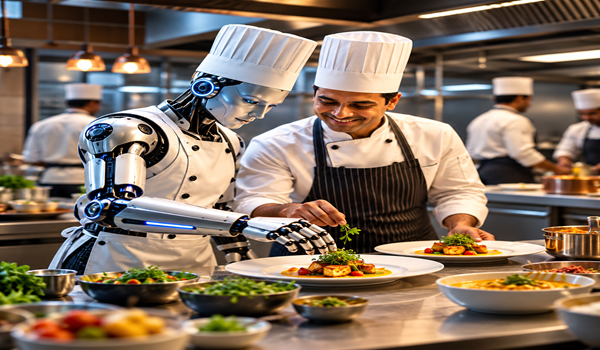
Artificial intelligence (AI) is changing how food companies manufacture products, manage supply chains and serve customers. However, industry leaders warn that technology alone cannot guarantee business success. Experts from McCain Foods, Gourmet Investments and Jubilant FoodWorks stressed that AI adoption must deliver measurable business benefits while retaining human oversight to prevent costly mistakes.
During a panel discussion titled From Pantry to Platform: Is the Food Industry Becoming a Technology Business?, the speakers explored how connected data systems, automation and AI are influencing decisions across the food value chain. They emphasised that simply introducing digital tools does not make a company technology-driven. The real benefit comes when information flows across departments, improves decision-making and delivers tangible commercial results.
Prashant Arora, senior director of digital technology at McCain Foods, highlighted the role of technology in connecting agricultural production with manufacturing and supply chain planning. Digital systems can help assess soil conditions, monitor crop performance and provide farmers with information to improve yields and quality. Linking this data with factory requirements can help food manufacturers anticipate raw material availability and plan production more efficiently.
For restaurant businesses, technology has moved far beyond billing counters and point-of-sale systems. Amit Jain, vice-president of IT at Gourmet Investments, said digital platforms now influence reservations, payments, customer engagement, kitchen operations, loyalty programmes and regulatory compliance.
Connecting these functions can help restaurants manage inventory, prepare food more efficiently and forecast demand. Such forecasts can account for seasonal changes, promotional campaigns and new outlet openings, while incorporating local knowledge from restaurant managers.
Rajat Mahajan, vice-president of engineering at Jubilant FoodWorks, explained how data-driven tools are changing restaurant expansion and delivery operations. Technology can analyse market conditions, customer catchment areas and commercial potential to help businesses evaluate new locations faster. In delivery, better coordination and fulfilment systems can reduce the time taken to serve customers, even when food preparation itself cannot be significantly accelerated.
The discussion also highlighted that technology investments do not always need sophisticated AI systems to produce meaningful results. Jain cited the digitisation of routine restaurant checklists, which reduced costs associated with maintaining printed registers by approximately 20%. Digital menu boards were another example, allowing restaurant chains to update prices and product information without the expense and delays involved in replacing physical displays. The investment was estimated to deliver a return within approximately three months.
AI agents are opening up further opportunities by handling tasks that previously required continuous human intervention. These systems can monitor scheduled technology processes, identify certain failures and take corrective action, reducing delays and freeing employees to address more complex problems.
AI can also analyse customer conversations and support marketing and sales activities. However, Arora cautioned that these tools create value only when they are properly integrated into existing business processes and aligned with clear organisational goals.
For food companies, the message is straightforward: technology should solve real business problems rather than become an end in itself. AI can improve efficiency, strengthen planning and enhance customer experiences, but human judgment remains essential to ensure that automated decisions are reliable, responsible and commercially worthwhile.