

Uttar Pradesh is stepping up efforts to strengthen rural incomes by promoting livestock farming, with the state Cabinet approving a new scheme that offers farmers a subsidy of ₹40,000 for every eligible indigenous cow purchased. The government will also cover 85% of the livestock insurance premium, reducing the financial burden on farmers and encouraging greater investment in animal husbandry.
Approved on October 27, the Uttar Pradesh State Livestock Mission aims to create rural employment, improve livestock productivity and help farmers diversify their income beyond crop cultivation. Animal Husbandry and Dairy Development Minister Dharmpal Singh announced the decision after the Cabinet meeting, highlighting the role of livestock-based activities in improving the economic condition of farming households.
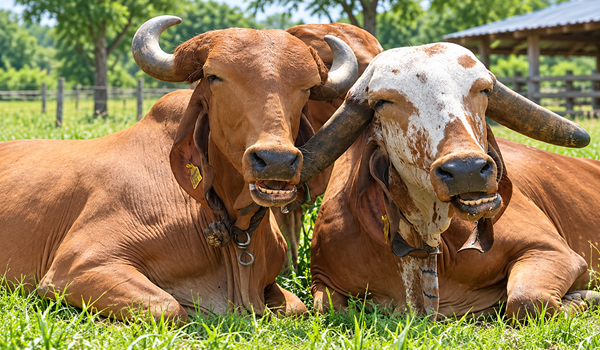
Under the scheme, farmers purchasing eligible indigenous cattle breeds, including Sahiwal, Gir, Hariana, Tharparkar and Gangatiri, will qualify for financial assistance. Those purchasing two eligible cows can receive a subsidy of ₹80,000. The programme also permits farmers to purchase approved breeds from other states and claim the subsidy, potentially widening access to productive animals.
Livestock insurance is another important component of the initiative. The state government will pay 85% of the insurance premium, while farmers will contribute the remaining 15%. The arrangement is intended to reduce the financial risks associated with livestock ownership, including losses arising from the death of insured animals.
The mission extends beyond cattle rearing to include goat farming, poultry, piggery and sheep rearing. It also seeks to improve the genetic quality of livestock through artificial insemination and other breeding interventions. Higher milk yields from indigenous cattle are a particular priority, with breeds such as Sahiwal, Gir, Hariana and Gangatiri expected to play an important role.
According to Singh, Uttar Pradesh already holds a leading position in livestock rearing and milk production and is also a significant producer of eggs, wool and meat. However, the sector faces persistent challenges, including low animal productivity, fragmented marketing systems, limited value addition, inadequate traceability and gaps in digital management.
The State Livestock Mission is designed to address these weaknesses by strengthening livestock-based enterprises and improving farmers’ access to markets. Better production practices, improved breeding and more organised marketing could help farmers secure greater returns from milk and other animal products.
The initiative builds on the broader objectives of the Centre’s National Livestock Mission, while introducing additional state-level support tailored to Uttar Pradesh’s agricultural economy. The government aims to make animal husbandry a more dependable source of supplementary income, particularly for farmers seeking to reduce their dependence on seasonal crop earnings.
Singh also pointed to existing support for poultry farming, under which beneficiaries receive 100 chicks free of cost to help establish small-scale poultry businesses. Such measures are intended to encourage rural households to take up allied agricultural activities with relatively modest initial investment.
By combining purchase subsidies, affordable insurance, breed improvement and support for allied livestock enterprises, Uttar Pradesh is seeking to turn animal husbandry into a stronger driver of rural employment and income growth. The success of the mission, however, will depend on effective implementation, access to veterinary services, reliable market linkages and farmers’ ability to convert higher productivity into sustainable earnings.