

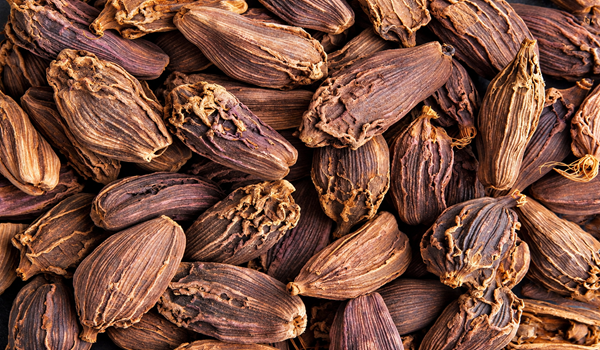
Once a dominant force in the global large cardamom trade, India is struggling to revive its ‘black gold’ as climate change, crop diseases and deteriorating plantation health threaten production in Sikkim, the country’s principal growing region.
The crisis comes at a time when global demand for large cardamom is expanding. The international market, valued at approximately $250 million in 2025, could reach $480 million by 2033, creating an opportunity for producing countries to increase exports. However, India’s ability to capitalize on this growth will depend on restoring plantation productivity and improving the resilience of its crop.
Large cardamom, known for its smoky flavour, is widely used in biryani, pulao, meat preparations and other culinary applications. It also finds use in beverages, perfumery and traditional medicine. Unlike green cardamom, which is primarily grown in the Western Ghats, large cardamom thrives under tree cover in the Eastern Himalayas.
For generations, the crop has been a major source of income for farming communities in Sikkim, helping households finance education, weddings and home construction. Its declining productivity is therefore threatening not only agricultural output but also the economic security of rural families.
Nepal overtakes India in global production
India once supplied nearly 85% of the world’s large cardamom, with Sikkim at the centre of production. During the early 2000s, the country exported around 5,000–6,000 tonnes annually to more than 20 countries, including markets in South Asia and West Asia. At its peak, exports generated more than ₹1,200 crore a year.
India’s annual exports have since declined to approximately 1,200 tonnes, generating an estimated ₹150–180 crore. Strong domestic demand and reduced exportable surpluses have contributed to the decline.
Meanwhile, Nepal has expanded its plantations and improved the quality of its planting material, emerging as the world’s largest producer. It now accounts for nearly 68% of global large cardamom production, compared with India’s share of around 22%. Bhutan accounts for the remaining 8–10%.
The shift highlights how improvements in agricultural practices and planting material can influence competitiveness in a high-value spice market. Nepalese cardamom also enters India for trading, blending and subsequent exports.
Despite losing ground in production, India continues to benefit from rising prices. Large cardamom prices have increased to around ₹2,300 per kg from approximately ₹400 per kg in the mid-2000s, strengthening the economic incentive to revive cultivation.
Climate stress and disease weaken plantations
The deterioration of plantations in Sikkim has emerged as one of the biggest challenges facing the industry. Under favourable conditions, large cardamom plants can begin yielding after four years and remain productive for 25–30 years. Farmers, however, report that plants are increasingly drying up within five to six years, forcing them to replant and wait for new crops to mature.
Disease-related losses have also reduced harvests. Some farmers are reportedly obtaining only 60–65% of their expected production.
Sikkim’s large cardamom output fell from 5,600 tonnes in 2003–04 to around 2,500 tonnes in 2010. Production subsequently recovered to 5,591 tonnes in 2024–25, approximately matching its earlier peak but leaving the sector vulnerable to renewed setbacks.
Changing climatic conditions are aggravating the problem. Warmer winters and increasingly unpredictable rainfall have placed additional stress on plants, making them more susceptible to disease.
“A prolonged drought in the mid-2000s weakened the crop so severely that normally harmless fungi inside the plant turned aggressive, triggering widespread disease,” said KB Subba, senior biotechnologist with Sikkim’s science and technology department.
Leaf blight, viral infections such as chirkey and foorkey, and rhizome rot have damaged plantations. In recent farmer surveys, nearly two-thirds of respondents identified crop disease as their biggest challenge.
According to Subba, the problem involves a combination of climate stress, soil health, plant genetics and microbial activity rather than a single disease that can be addressed through one intervention.
Decades of repeatedly propagating plants from the same genetic stock have also reduced genetic diversity, potentially limiting their ability to withstand diseases and changing weather conditions. Declining soil health, reduced forest shade and inadequate irrigation have further compounded the problem, with more than half of farms continuing to depend entirely on rainfall.
Livelihoods at stake in Sikkim
The consequences extend well beyond agricultural production. Around 21% of rural households in Sikkim cultivate large cardamom, and farming is the principal source of income for nearly 80% of these households. In a good year, the crop can contribute up to 70% of a household’s earnings.
Finding alternative crops is difficult because few agricultural options offer comparable returns on steep, shaded mountain farms.
“Large cardamom is our backbone. It is how most families here earn their living. But in recent years, yields have clearly fallen,” said Dhan K Gurung, who heads a farmer community in North Sikkim’s cardamom-growing belt.
He noted that government laboratories had begun supporting farmers with improved planting material, although access to disease-resistant varieties remained uneven.
The challenge is particularly significant because large cardamom is a long-term crop. When established plantations fail, farmers face not only the immediate loss of income but also several years of waiting before replacement plants begin producing.
Sikkim turns to science for revival
The Sikkim government is seeking to address the crisis through its Mero Alaichi, Mero Dhan (My Cardamom, My Wealth) mission. The initiative aims to move beyond the distribution of saplings and address the broader factors affecting plantation health, including soil conditions, shade, irrigation, disease, genetics and cultivation practices.
Scientists are experimenting with seed-based propagation and controlled crossbreeding to develop stronger plants capable of tolerating diseases and drier conditions. One objective is to extend the productive life of plants to 12–15 years, reducing the frequency of plantation failure and replanting.
The approach reflects a shift towards building long-term resilience rather than relying solely on short-term measures to restore yields.
“The decline of large cardamom is not just an agricultural issue, it is a livelihood and ecological challenge that requires scientific, institutional and community-led solutions,” said Sandeep Tambe, principal secretary, Sikkim.
He added that a sustainable revival would require farmers, researchers, markets and policymakers to work together.
A growing global market, but a narrow window
The outlook for large cardamom presents a contrast between expanding global demand and mounting production challenges in India. With the global market projected to grow from $250 million in 2025 to $480 million by 2033, the opportunity remains significant.
However, higher prices alone will not guarantee a recovery. India needs healthier plantations, more resilient planting material, better disease management and greater access to scientific support at the farm level.
For Sikkim, reviving large cardamom is about more than regaining market share from Nepal. It is about protecting a crop deeply embedded in the state’s rural economy and agricultural landscape.
Whether India’s ‘black gold’ can regain its former prominence will depend on how effectively research and policy translate into healthier plantations and more reliable incomes for farmers.