

Synopsis:
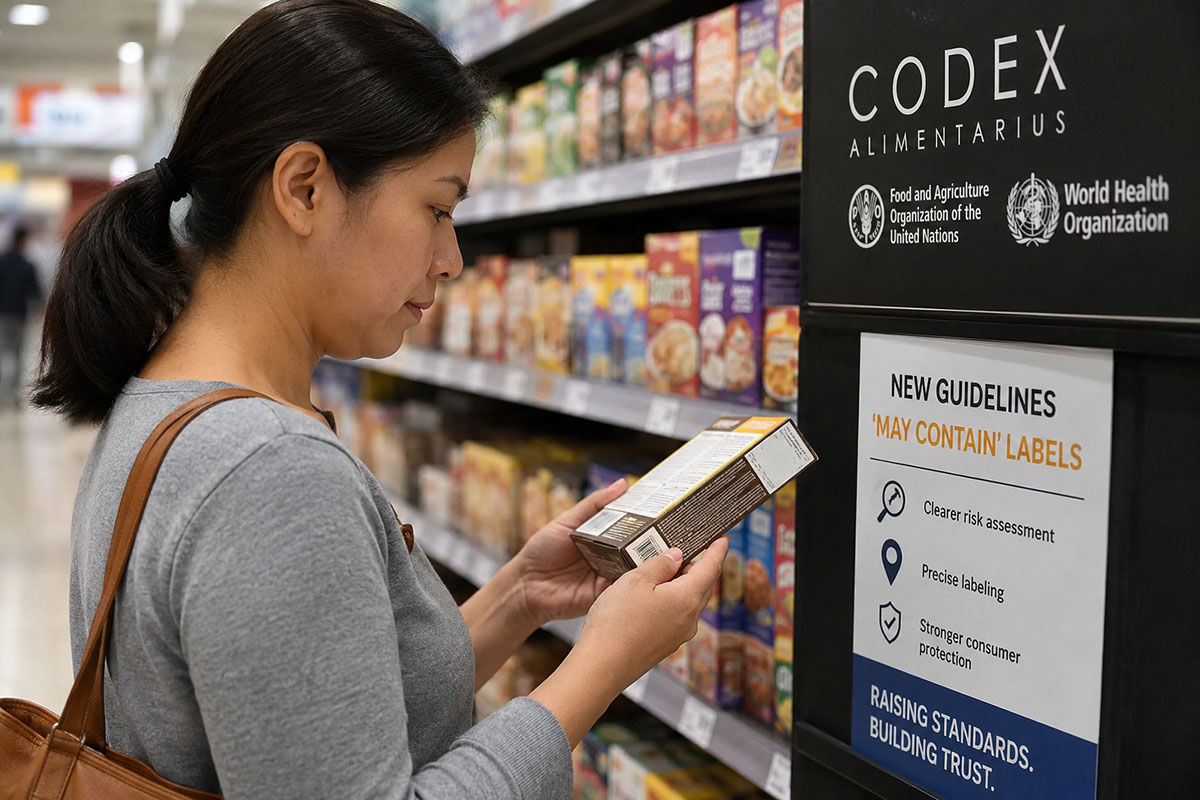
The Codex Alimentarius Commission has adopted new science-based international guidelines for precautionary allergen labelling, a move that could reshape food manufacturing, labelling practices and global trade. The new framework requires “may contain” statements to be backed by scientific risk assessments, offering greater clarity for consumers while increasing compliance expectations for the food industry.
The Codex Alimentarius Commission has approved new international guidelines governing the use of precautionary allergen labelling (PAL), introducing a globally harmonised framework that is expected to influence food labelling regulations, manufacturing practices and international trade.
Adopted during the Commission’s 49th Session in Geneva, the new guidance aims to ensure that precautionary statements such as “may contain” are based on scientific evidence rather than used as a blanket legal safeguard. The move is expected to improve consumer trust while encouraging food manufacturers to strengthen allergen control systems across their production facilities.
Food allergies affect an estimated 4.3% of the world’s population, with reactions ranging from mild symptoms to severe, potentially fatal anaphylaxis. Yet despite the growing prevalence of food allergies, precautionary allergen labels remain inconsistent across countries and product categories. In many markets, the absence of harmonised regulations has resulted in widespread use of “may contain” warnings, leaving consumers uncertain about the actual level of risk.
The new Codex framework seeks to change that.
Under the revised guidance, food manufacturers will be expected to issue precautionary allergen statements only after implementing robust allergen management programmes and conducting scientific risk assessments that demonstrate an unavoidable residual risk of unintended allergen contamination.
The guidelines have been incorporated as an annex to the General Standard for the Labelling of Pre-packaged Foods (CXS 1-1985), creating a common international benchmark for governments, regulators and food businesses. Rather than replacing good manufacturing practices, the framework reinforces them by making precautionary labelling the final step in allergen risk management—not the first.
The recommendations are supported by scientific advice developed through seven joint expert consultations organised by the Food and Agriculture Organization (FAO) and the World Health Organization (WHO). Together, they provide food businesses with a standardised methodology for evaluating allergen risks and determining when precautionary labelling is genuinely warranted.
For the food industry, the decision carries implications that extend well beyond packaging. Companies exporting to multiple international markets may benefit from greater regulatory alignment, reducing inconsistencies in allergen declarations while strengthening consumer confidence. At the same time, manufacturers may need to invest further in allergen management systems, production controls and risk assessment capabilities to comply with the new science-based expectations.
The guidelines also complement existing Codex standards on mandatory allergen declaration and the Code of Practice on Food Allergen Management for Food Business Operators (CXC 80-2020), reinforcing a broader global effort to improve food safety and transparency.
Established jointly by FAO and WHO, the Codex Alimentarius Commission develops internationally recognised food standards that serve as reference points for national food laws and global food trade. Although Codex standards are voluntary, they are widely adopted by governments and frequently shape regulatory frameworks worldwide.
With the latest decision, Codex has moved to make precautionary allergen labelling more meaningful, consistent and scientifically defensible—signalling a shift that could influence food safety standards and consumer protection policies across global markets.