

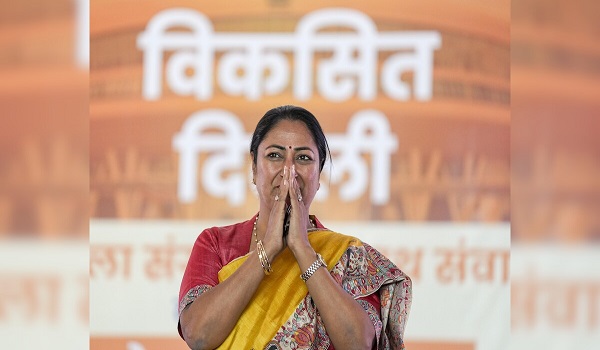
Traders cite irrational tax slabs on daily food items—paratha taxed more than roti, lassi taxed if packaged—creating billing chaos and hurting business margins.
Mounting frustration over the complex and inconsistent Goods and Services Tax (GST) structure has triggered sharp criticism from the food and hospitality sector, with traders and restaurant owners demanding immediate rationalization. In a bid to highlight the impact on their daily operations, a delegation of food industry stakeholders met Delhi Chief Minister Rekha Gupta at the Delhi Secretariat.
Organised under the leadership of Brijesh Goyal, chairman of the Chamber of Trade and Industry (CTI), the meeting brought together a diverse group of industry voices—restaurant owners, dhaba operators, food traders, and hoteliers—all united in calling for clarity and reform in the GST regime.
CTI Chairman Brijesh Goyal pointed to the sheer complexity of tax rates on food items as a major challenge for food service businesses.
“Dining in a restaurant attracts 5% GST, but if the customer orders ice cream afterwards, it’s taxed at 18%. Similarly, roti is taxed at 5%, while paratha is at 18%. If a customer orders both in one meal, billing becomes a nightmare,” he said.
The tax disparity extends to commonplace items:
Bread is tax-free, but a pizza base attracts 5% GST.
Lassi served in a glass is exempt, but packaged lassi is taxed at 5%.
Plain cashews are taxed at 5%, while flavoured cashews draw 12% GST.
Powdered chutney has a 5% GST, but the same chutney in liquid form is taxed at 12%.
Loose namkeen is taxed at 5%, but packed namkeen jumps to 12%.
Adding to the confusion is the linkage between infrastructure and tax rates. Goyal noted that if a restaurant is GST-registered with an air conditioner, even if the AC is not in use, all food served in that outlet is taxed at 18%, regardless of the type of dish or service model.
“This creates confusion, especially for small eateries and cafes that operate with minimal resources,” Goyal added.
Virendra Jain, President of the Federation of Sweets and Namkeen Manufacturers, said the fragmented GST framework is disrupting operations and limiting access to input tax credit.
“Our sector is already facing rising ingredient costs. These inconsistent tax slabs are making compliance tougher and billing unnecessarily complicated. It’s affecting our ability to compete, especially for small businesses,” Jain said.
After hearing the grievances, Chief Minister Rekha Gupta assured the delegation that the issue of GST disparity would be raised at the next GST Council meeting. She also directed officials from Delhi’s GST department to document specific inconsistencies and assist businesses in the interim.
“We acknowledge the concern and will work with stakeholders and the Centre to bring rationality to the GST structure,” the CM said, as per officials present at the meeting.