

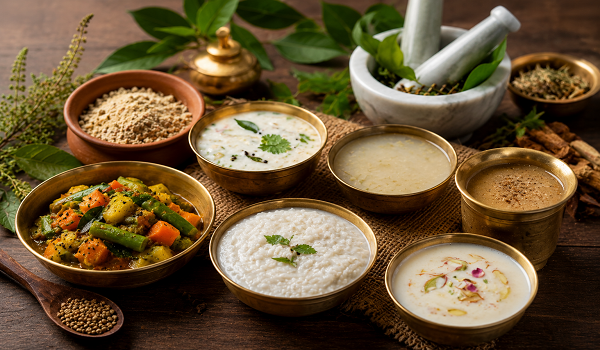
The Food Safety and Standards Authority of India (FSSAI) has expanded its Ayurvedic Aahar regulations, introducing a detailed operational framework aimed at standardising traditional dietary practices while preserving classical preparation methods.
The move builds on the primary framework notified on July 25, 2025, and provides a comprehensive, recipe-based classification of Ayurvedic food preparations across therapeutic categories, including Paka (cooked vegetable dishes), Peya (rice gruels), Rasala (curd-based preparations), and Shaktava (roasted grain flour beverages).
The expanded schedule has been compiled using authoritative Ayurvedic texts such as the Charaka Samhita, Ashtanga Hridaya, Bhavaprakash Nighantu, and Pakadarpanam.
According to the regulator, the framework specifies raw ingredients, botanical nomenclature, ingredient proportions and recommended processing methods to facilitate the safe commercial production of Ayurvedic foods while maintaining traditional formulations.
Under the revised guidelines, FSSAI has standardised 29 recipes under the Paka category, 61 recipes under Peya, nine recipes under Rasala, and 10 recipes under Shaktava.
The latest expansion builds on the list of 22 Ayurveda Aahar categories notified under the Food Safety and Standards (Ayurveda Aahara) Regulations, 2022, which included preparations such as black gram fritters, wheat balls, soups, gulkand, sweetened milk, coriander infusion, steamed rice cakes, raw mango drink, buttermilk curry, khichdi, milk-based preparations, modaka, murabba and panaka.
FSSAI said the list was prepared in consultation with the Ministry of Ayush to help Food Business Operators (FBOs) manufacture Ayurvedic food products in compliance with regulatory requirements.
The regulator has also provided a mechanism for manufacturers to seek inclusion of additional Ayurvedic food products under Category A. FBOs can submit requests supported by evidence from authoritative Ayurvedic texts listed in Schedule A of the regulations.
The Ayurveda Aahar regulations serve as a reference framework for food businesses producing traditional Ayurvedic food preparations. While the regulations permit products containing botanical ingredients aligned with the concept of Ayurveda Aahar, they explicitly exclude Ayurvedic medicines. FBOs are required to formulate products in accordance with the categories and structural requirements specified under Schedule B of the regulations.