

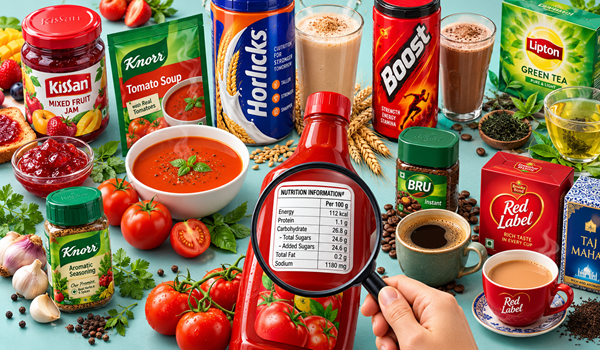
Hindustan Unilever Limited (HUL) has welcomed the proposed food labelling regulations of the Food Safety and Standards Authority of India (FSSAI), supporting efforts to make nutritional information more visible and easier for consumers to understand.
HUL Managing Director and CEO Priya Nair said the company supported greater transparency in food labelling and was prepared to comply with the regulations once they are finalised.
“As a consumer in the country, that is what you would want: transparency in labelling,” Nair said, emphasising the importance of helping people make informed decisions about the food they buy.
She added that HUL had spent years working to provide consumers with good-quality products and believed the company was well placed to meet the proposed requirements. Discussions with industry bodies are currently focusing on how the new labels should be introduced and how consumers can be educated about their significance.
“Whatever the regulation is, we will simply comply with the regulation,” Nair said.
The proposed rules seek to make it easier for consumers to identify packaged foods containing high levels of sugar, salt or fat. Under the plan, products exceeding specified nutritional thresholds would carry prominent warnings on the front of their packaging, allowing shoppers to understand key nutritional concerns without having to study detailed information printed on the back.
In August, FSSAI informed the Supreme Court that it had proposed a red-coloured front-of-pack warning system for products high in added sugar, saturated fat and salt. The proposed labels would include declarations such as “High Fat”, “High Sugar”, “High Salt” or “Highly Sweetened Beverage”, depending on the product’s nutritional composition.
According to the regulator’s submission, the warning would appear in a font one point larger than that used in the nutrition information table on the back of the pack. The aim is to make the information prominent, simple and easy to understand, particularly for consumers who may find conventional nutritional tables difficult to interpret.
FSSAI has also proposed introducing front-of-pack nutrition labelling in phases. This approach would give consumers time to become familiar with the new system while allowing food manufacturers sufficient time to assess their products and reformulate them, where necessary.
The proposed changes could have implications for India’s packaged food and beverage industry, which offers a wide range of products with varying nutritional profiles. Clearer warnings may encourage consumers to compare products more carefully while prompting manufacturers to review sugar, salt and fat levels in their formulations.
HUL has a broad food and beverage portfolio, including Kissan, Knorr and Hellmann’s in packaged foods and condiments, alongside Horlicks and Boost in the nutrition drinks segment. The company’s response is significant as the debate over clearer nutritional labelling gains momentum in India.
The proposal also comes amid growing public attention to healthier diets and the role of packaged foods in everyday consumption. However, the effectiveness of the new system will depend on clear communication, consistent implementation and consumer awareness.
For the industry, the challenge will be to comply with the eventual regulations while maintaining product quality, taste and affordability. For consumers, the proposed labels could offer a simpler way to identify products high in nutrients of concern and make more informed purchasing decisions.