

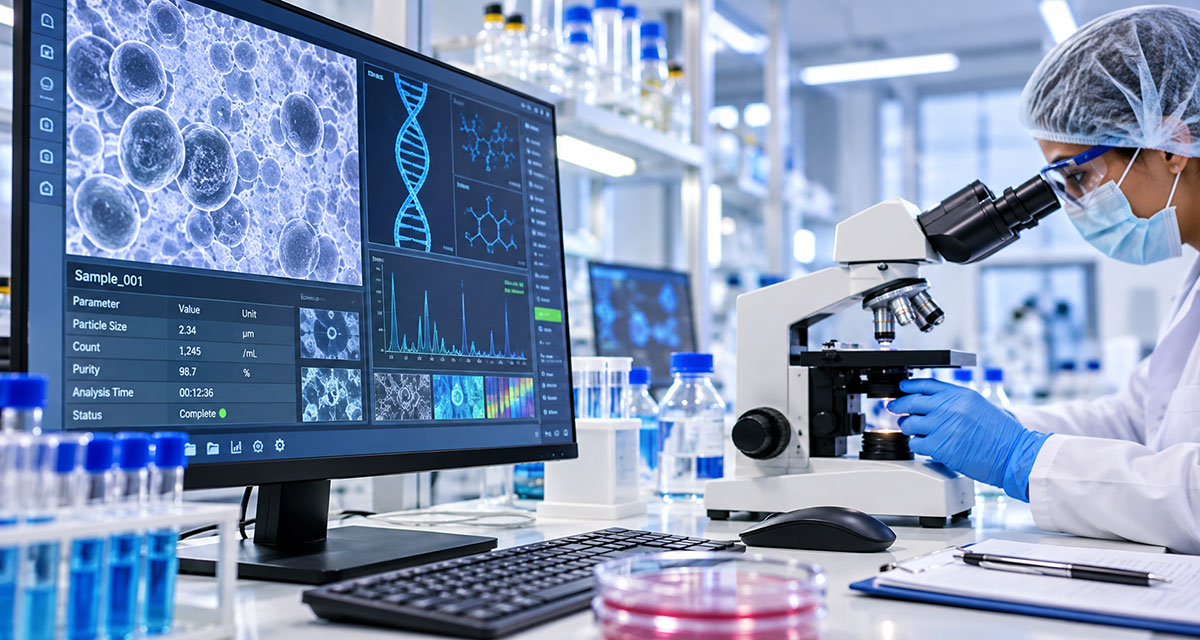
As food supply chains become more complex, conventional visual checks alone may no longer be enough to identify contamination. Molecular testing is increasingly emerging as an important tool for detecting pathogens, allergens and other risks before food products reach consumers.
Ajay Kandhari, Managing Director of DSS Imagetech Pvt. Ltd., says molecular testing can help manufacturers verify ingredient quality and strengthen food safety practices across different stages of the supply chain.
DSS Imagetech Pvt. Ltd. is a technology company providing advanced scientific, diagnostic and imaging solutions for laboratories, healthcare and research applications. Its portfolio includes molecular diagnostic technologies used for testing and analysis across specialised laboratory environments.
According to Kandhari, contamination can enter the food chain at several points. Handling of ingredients by staff, shared preparation areas and inadequate storage conditions can lead to cross-contact as well as bacterial contamination, much of which may not be detectable through visual inspection.
“As consumers become increasingly aware of the food and water ecosystem, food manufacturers and dairy processors are increasingly using advanced molecular diagnostic solutions at different stages of production,” Kandhari says.
These technologies include testing kits for pathogen and allergen detection, species identification, Genetically Modified Organism (GMO) screening and DNA extraction.
For food manufacturers and testing laboratories, such testing can help verify both raw materials and finished products. It can also support checks for product authenticity and microbial quality before products are released into the market.
The need for stronger testing becomes particularly important during the monsoon. Increased humidity, improper storage, water contamination and difficult transportation conditions can raise contamination risks across sourcing, processing, storage and distribution.
Water safety also becomes a major concern during this period. Waterlogging and contamination can contribute to diseases such as cholera, typhoid, dysentery, diarrhoea and hepatitis, while organisms including E. coli, Salmonella, Coliforms, Shigella, Vibrio cholerae, Campylobacter and Legionella can pose serious health risks when present in drinking water.
This is where molecular diagnostics can provide an additional layer of protection.
Kandhari explains that molecular testing enables laboratories and food businesses to examine samples at the DNA level and identify specific contaminants with high sensitivity and specificity.
Another advantage is speed. Results can be obtained in less than three hours in some applications, helping organisations respond quickly when contamination is suspected. Faster identification can allow businesses to investigate the source, strengthen quality-control measures and prevent potentially unsafe food or water from moving further through the supply chain.
The larger opportunity, however, lies in moving from reactive testing to preventive food safety. Instead of waiting for contamination incidents to emerge, manufacturers, processors and laboratories can use molecular diagnostics as part of routine quality-control programmes.
“Molecular diagnostic technologies are essential to preserve food safety all year round, but their role becomes particularly valuable during the rainy season, when increased humidity, water contamination and improper storage can heighten food and water safety risks,” Kandhari says.
For India’s rapidly expanding food-processing and dairy sectors, such technologies could become increasingly relevant as companies seek faster and more reliable ways of verifying safety, quality and authenticity.
“When India’s food ecosystem adopts molecular testing proactively, it can move towards a safer and more transparent food future, where potential hazards are identified earlier and food safety decisions are supported by reliable scientific testing,” Kandhari concludes.