

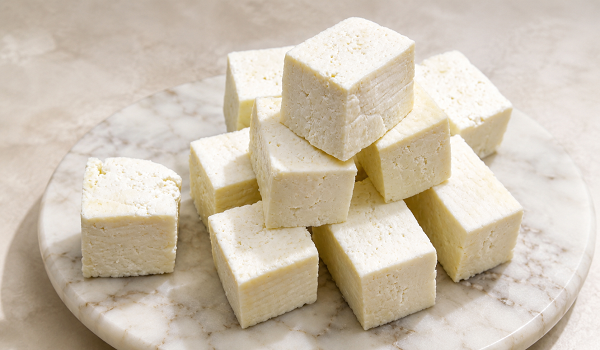
The Punjab government has prohibited the manufacture, storage, transport, distribution and sale of non-dairy products being marketed as paneer, citing public health concerns and misrepresentation of food products.
The Punjab government has imposed a one-year ban on the manufacture, storage, transport, distribution and sale of analogue or non-dairy paneer being sold under the name “paneer” across the state.
The prohibition was issued by the Food and Drug Administration (FDA), Punjab, through an order dated August 20, 2026. The Commissioner of Food Safety invoked Section 30(2)(a) of the Food Safety and Standards Act, 2006, which allows state food safety authorities to prohibit the manufacture, storage, distribution or sale of a food product in the interest of public health for a period of up to one year.
The order follows findings that some food business operators (FBOs) were manufacturing paneer-like products using vegetable oil or fat and other non-dairy ingredients instead of milk, and selling them as paneer.
Under Regulation 2.1.16 of the Food Safety and Standards (Food Products Standards and Food Additives) Regulations, 2011, chhana and paneer are required to be made from milk or milk products. Products made using vegetable fats or oils in place of dairy ingredients do not meet the prescribed standard for paneer.
Punjab’s food safety authorities have now been directed to step up enforcement across the supply chain. A compliance letter issued on August 25 instructed Designated Officers and Food Safety Officers throughout the state to strictly implement the prohibition.
Officials have been asked to conduct regular and surprise inspections at dairy units, paneer manufacturing facilities, wholesalers, distributors, retailers, cold stores and warehouses. Authorities will also examine transport and vehicle records associated with paneer consignments.
The checks will extend to the food-service sector, with officials directed to verify the source and purchase records of paneer used by hotels, restaurants, dhabas, caterers and institutional kitchens.
Any food business operator found manufacturing, storing, transporting, distributing or selling analogue paneer under the “paneer” name will face immediate legal action under the Food Safety and Standards Act and related regulations. The enforcement directive has been marked “extremely urgent.”
The move comes amid recurring concerns over adulterated and synthetic paneer in the market, particularly ahead of the festive and wedding seasons. Food safety authorities in several states have previously flagged vegetable-fat-based substitutes being marketed as dairy paneer.
Under FSSAI standards, products made with vegetable oils, starch or other non-dairy fillers cannot be passed off as conventional paneer. Such products are classified as analogues and must comply with applicable labelling requirements rather than being sold simply as “paneer.”
The Punjab government’s action is therefore aimed not only at food safety but also at preventing consumers from being misled about the nature of the product they are buying.
With the one-year prohibition now in force, food businesses across Punjab face tighter scrutiny of their paneer sourcing, manufacturing and distribution practices, particularly as demand rises during the upcoming festive season.