

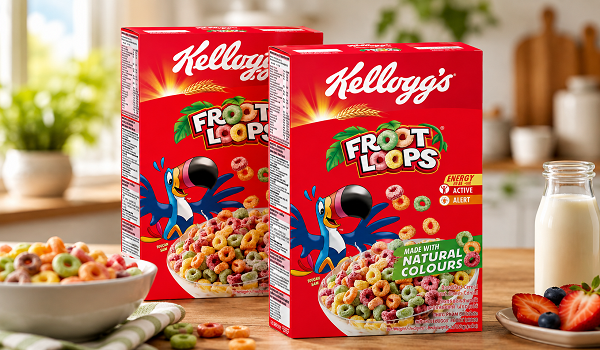
WK Kellogg is accelerating its move away from artificial colours, announcing that it will eliminate synthetic food dyes from Froot Loops and the rest of its U.S. cereal portfolio nearly a year ahead of its original deadline.
The company said cereals made with the new recipes will begin coming off production lines in the coming months and are expected to reach retailers by the end of 2026. WK Kellogg had previously committed to eliminating synthetic food dyes by the end of 2027.
The reformulation covers the remaining 15% of its cereal portfolio that still uses artificial colours, including popular brands such as Froot Loops, Apple Jacks and some limited-edition products.
WK Kellogg has replaced petroleum-based synthetic dyes with six colours derived from fruits, vegetables and other plant-based sources. Turmeric will be used to produce yellow shades, while annatto will provide orange colours. The company tested hundreds of ingredient combinations before finalising the new formulations.
Replacing artificial colours involved more than simply changing ingredients. WK Kellogg had to secure reliable supplies of natural colours, modify manufacturing processes and ensure that the cereals maintained their familiar taste, texture, aroma and appearance.
The company said it conducted extensive consumer testing involving thousands of parents, children and teenagers to make sure the reformulated products continued to deliver the experience consumers expect from its brands.
The decision comes as food manufacturers face growing pressure from regulators, policymakers and consumers to reduce the use of synthetic food colours. General Mills has also committed to removing artificial colours from its U.S. retail portfolio by the end of 2027, while companies including Kraft Heinz and The Campbell’s Company have announced similar plans.
The shift has gained further momentum following calls from U.S. Health and Human Services Secretary Robert F. Kennedy Jr. for food manufacturers to voluntarily phase out synthetic dyes.
Moving to natural colours has also required investment across WK Kellogg’s manufacturing and supply chain. Unlike many synthetic dyes, some natural colour ingredients require specialised handling and storage, including refrigeration. The company has therefore upgraded manufacturing facilities and adjusted its supply chain to support production using naturally derived colours.
The reformulation is part of WK Kellogg’s broader effort to strengthen the breakfast cereal category as consumers increasingly look for fresher, protein-rich and convenient breakfast options. The company has also introduced packaging that highlights nutritional benefits such as protein and fibre while promoting cereal as a convenient breakfast choice.
WK Kellogg believes removing artificial colours will strengthen consumer confidence and improve the appeal of its cereal brands as demand for cleaner ingredient labels continues to grow.
The move also reflects a wider change across the packaged food industry, where companies are increasingly replacing artificial colours with naturally derived alternatives. While the transition can involve higher costs and manufacturing challenges, clean-label reformulation is becoming an important part of product development and brand positioning across the food industry.