

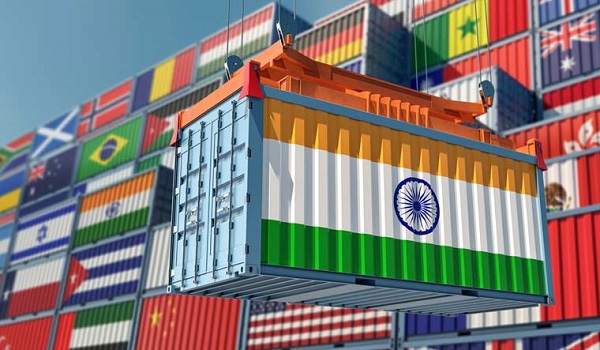
India’s agricultural export sector is facing fresh uncertainty as escalating tensions in West Asia threaten trade flows worth nearly $11.8 billion, according to the Global Trade Research Initiative (GTRI). Disruptions to shipping routes, rising freight insurance costs, and logistical delays are beginning to impact the movement of food products to one of India’s most crucial overseas markets.
The region accounted for over one-fifth of India’s total agricultural and food exports in 2025, making it a vital destination for staples such as rice, fruits, vegetables, spices, dairy products, and processed foods. Analysts say the current conflict could directly affect farmers, exporters, and food processors across multiple Indian states that depend heavily on Gulf demand.
Gulf markets critical for India’s food exports
According to GTRI estimates, India exported agricultural and food products worth $11.8 billion to West Asia in 2025, representing about 21.8% of the country’s total agri exports. The region’s geographic proximity and large Indian diaspora have historically made it a natural and stable market for Indian food shipments.
However, ongoing geopolitical tensions have begun to disrupt shipping lanes and increase marine insurance premiums, making exports costlier and more unpredictable. The uncertainty is particularly worrying for exporters dealing in perishable goods, where delays can quickly translate into heavy losses.
GTRI Founder Ajay Srivastava said the conflict is creating a ripple effect across the entire supply chain, from ports to farms, with exporters already reporting slower shipments and higher costs.
Rice exports face the biggest threat
Among all commodities, rice exports are considered the most vulnerable. India shipped rice worth $4.43 billion to West Asia last year, accounting for nearly 36.7% of its global rice exports. The Gulf markets are especially important for producers in Punjab, Haryana, Uttar Pradesh, Andhra Pradesh, and Telangana, where large volumes are cultivated specifically for export.
In addition to rice, the region is a major buyer of bananas, onions, garlic, pulses, nuts, and vegetables. India exported bananas worth nearly $396 million and onions and garlic worth over $111 million to the region in 2025.
Spices also form a significant share of shipments, including nutmeg, mace, cardamom, cumin, coriander, ginger, and turmeric. Coffee, tea, and processed foods continue to see strong demand, along with meat, fish, and frozen products, which together account for a sizeable portion of India’s food exports to the Gulf.
Dairy, beverages and processed foods also exposed
The impact is not limited to farm produce. India exported dairy products worth about $281 million to West Asia last year, nearly 29% of its total dairy exports. Shipments of alcoholic and non-alcoholic beverages, valued at around $197 million, also depend heavily on the region, accounting for more than 40% of exports in that category.
Processed foods, sugar products, and cocoa preparations together contributed over $1.3 billion in exports, highlighting the deep integration of India’s food processing industry with Gulf markets.
Export dependence raises concerns for farmers and processors
Trade experts say India’s agri exports have grown increasingly dependent on West Asian markets over the past decade. The combination of short shipping distances, strong diaspora demand, and established trade networks has made the region a cornerstone of India’s food export strategy.
But the current conflict has exposed the risks of this dependence. Rising insurance premiums, longer shipping routes, and uncertainty at ports could squeeze margins for exporters and eventually reduce farm-gate prices if shipments slow down.
GTRI cautioned that prolonged instability in West Asia could affect not only exporters but also millions of farmers, transporters, processors, and small businesses linked to the agri-export ecosystem.
For India’s food industry, the situation is a reminder that global trade is as much shaped by geopolitics as by production — and when conflict disrupts supply lines, the impact travels all the way back to the farm.