

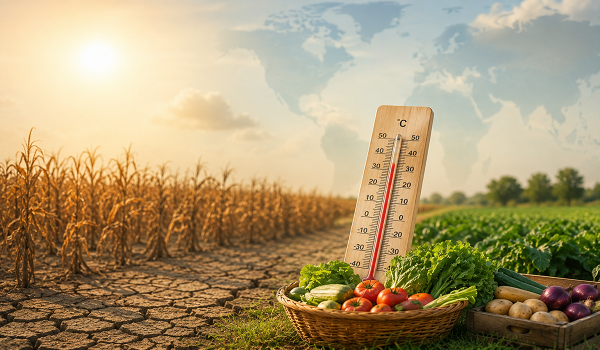
Extreme heat across Europe and parts of Asia is emerging as a major threat to global food supplies, adding fresh pressure to agricultural systems already strained by geopolitical tensions and rising input costs.
Farmers and industry experts say prolonged high temperatures linked to developing El Niño conditions and climate change are increasingly affecting crop yields, livestock productivity and food production across key agricultural regions.
Across Europe, intense heat has disrupted farming operations and placed crops and animals under severe stress. In France, soaring temperatures have damaged corn fields and caused significant poultry losses, while in Spain livestock farmers are reporting reduced feed intake among pigs and concerns over fruit development during critical growth stages. In the UK, dairy farmers are experiencing lower milk output as heat stress affects cattle.
Meteorologists have warned that above-normal temperatures could persist in the coming months, potentially extending the impact on agricultural output. Beyond Europe, weather disruptions are also affecting food-producing regions across Asia and North America.
In India, delayed monsoon activity and lower rainfall are raising concerns over crops such as rice and sugar, while dry conditions in Vietnam are affecting coffee-producing regions. Weather volatility in China and the US is also creating uncertainty around grain production.
Industry experts warn that even if fertilizer and energy markets stabilise, adverse weather in major producing countries could tighten global supplies and increase food inflation risks.
Farmers across regions are increasingly adopting mitigation measures such as cooling systems, irrigation strategies and revised operating schedules to protect crops and livestock. However, agricultural groups say recurring climate-related disruptions are making food production more unpredictable and increasing financial pressure on farming communities.
The latest developments highlight growing concerns around global food security as climate events become more frequent and severe, forcing producers and supply chains to adapt to a changing agricultural landscape.