

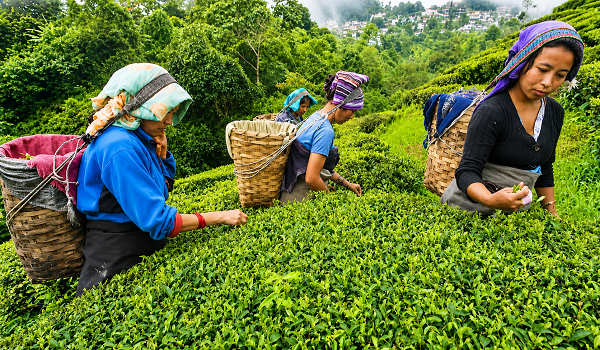
The Darjeeling tea industry has urged the Centre to introduce targeted support measures as the sector grapples with mounting financial pressure driven by falling production, declining prices, climate-related disruptions, and labour shortages.
Known globally for its Geographical Indication (GI) status, Darjeeling tea has witnessed a significant structural decline in production over the years due to ageing tea bushes, challenging terrain conditions, erratic weather patterns, and persistent manpower constraints.
Industry data indicates that production has fallen sharply from 11.58 million kg in 2008 to around 5.3 million kg in 2025. At the same time, tea prices have also remained under pressure, recording a negative compound annual growth rate (CAGR) of nearly 2% between 2018 and 2024, affecting the economic sustainability of tea estates.
Industry representatives have called for the introduction of a sustainable pricing mechanism, including a Minimum Sustainable Price (MSP) linked to production costs and quality parameters. The proposed framework could also function as a Minimum Import Price to help reduce market volatility and improve long-term viability.
The sector has also requested the extension of Central and State welfare, agricultural, and climate-resilience programmes to organized tea plantations. Industry stakeholders said support in areas such as healthcare, irrigation, crop insurance, rural infrastructure development, and off-season employment generation would be critical for strengthening the sector.
Given the increasing impact of climate change on tea cultivation, the industry has urged authorities to extend the benefits of schemes under the Ministry of Agriculture, including Pradhan Mantri Krishi Sinchai Yojana, Accelerated Irrigation Benefit Programme, and Pradhan Mantri Fasal Bima Yojana, to organized tea plantations.
In addition, the industry has sought a dedicated relief package for the Darjeeling tea sector, including interest subvention on working capital and financial assistance measures aimed at improving the long-term resilience of the industry.