

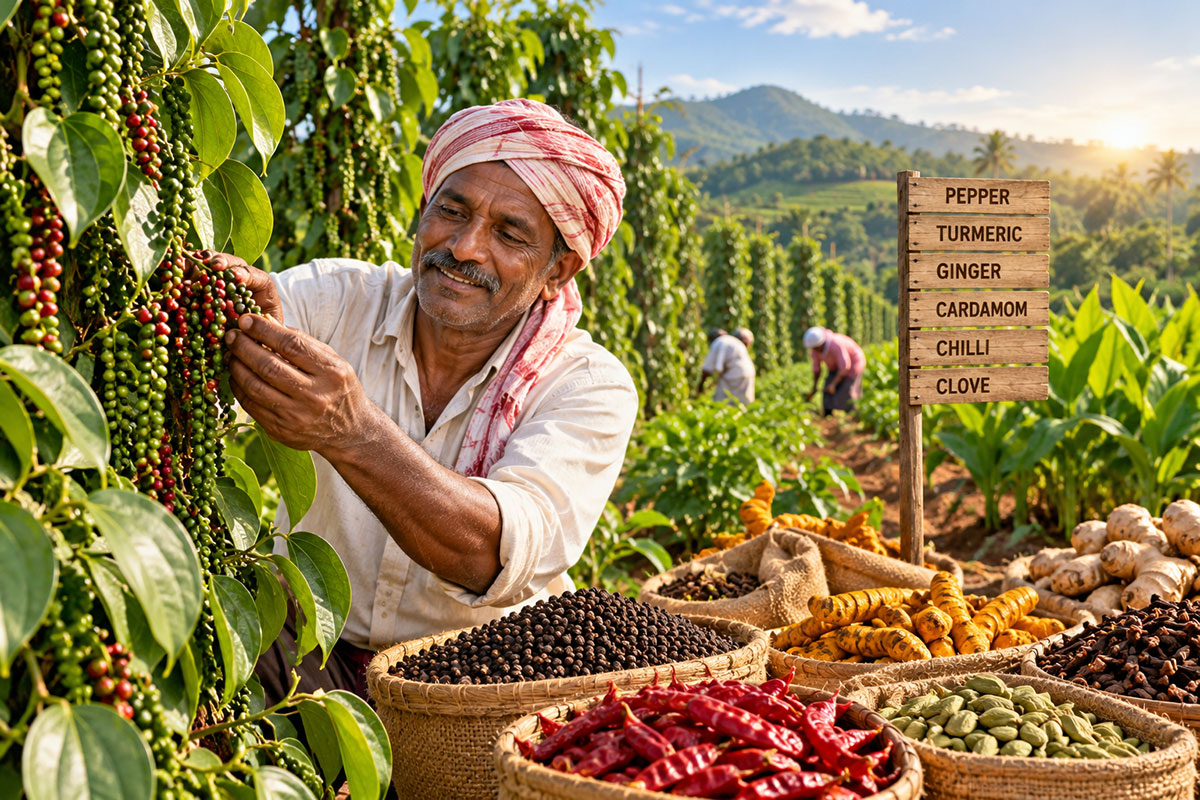
India’s spice industry is increasingly taking food-safety controls beyond the processing plant and back to the farm, as manufacturers strengthen traceability, pesticide management, raw-material sourcing and testing practices.
The shift follows heightened scrutiny of Indian spices in overseas markets and is gradually changing the way organised spice companies manage their supply chains. Rather than depending primarily on testing finished products, companies are focusing on preventing contamination before raw spices reach processing facilities.
A major turning point came in 2024, when concerns over ethylene oxide (ETO) in certain Indian branded spice products led to recalls in Singapore and Hong Kong. The Spices Board subsequently made ETO testing mandatory for spice consignments exported to these two markets and issued comprehensive guidelines aimed at preventing ETO contamination in spices exported from India.
Two years later, the discussion has expanded beyond export compliance. Quality assurance, traceability and food safety are increasingly becoming competitive factors within India’s domestic spice market as well.
From processing plant to farm
One of the industry’s biggest challenges is that some food-safety risks originate during cultivation itself. Pesticide residues entering spices at the farm cannot always be addressed later through cleaning, grinding or other processing operations.
As a result, organised spice companies are increasingly looking towards Integrated Pest Management (IPM), controlled pesticide application, soil testing, farmer training and closer monitoring of cultivation practices.
Direct procurement from farmers is also gaining importance. By reducing dependence on open-market sourcing and maintaining records of where raw materials originate, processors can potentially establish greater control over quality and traceability.
Regular sampling and testing then provide another layer of assurance before raw spices enter the manufacturing process.
India’s $4.52-billion spice exports
The stakes are significant for India, which remains one of the world’s largest producers and exporters of spices.
India produced an estimated 11.99 million tonnes of spices in FY25, while spice exports were valued at approximately US$4.52 billion.
Chilli was the largest export category at around US$1.34 billion, followed by cumin at US$732.35 million and turmeric at US$341.54 million.
However, the reported average monthly value of spice exports during FY26 was about US$413.94 million, compared with US$520.54 million in FY25. This represented a decline of approximately 20%.
While international demand, currency movements and several other factors influence exports, contamination incidents and shipment rejections have demonstrated how food-safety compliance can directly affect India’s reputation in international markets.
Traceability becomes a business advantage
The changes are equally significant for India’s domestic spice industry.
The Indian spice market was estimated at approximately ₹2.22 lakh crore in 2025 and is projected to reach around ₹5.29 lakh crore by 2034.
Around 60% of the domestic market reportedly remains unorganised, while national brands account for less than 30% of total revenue. This leaves considerable room for organised processors to differentiate themselves through consistent quality, testing, traceability and food-safety assurance.
Many consumers continue to purchase loose spices where information about sourcing, pesticide use, processing conditions and testing may be limited. Greater awareness of food safety could therefore encourage a gradual shift towards products offering stronger quality assurances.
For organised manufacturers, terms such as ETO-free, IPM-led sourcing, traceable ingredients and tested spices are consequently moving beyond compliance requirements and becoming part of brand positioning.
Processing technology is also evolving alongside sourcing practices. Techniques such as cold grinding can help retain the natural aroma and characteristics of spices, while value-added blends and masalas provide manufacturers with opportunities to move beyond commodity products.
Quality begins before processing
The larger lesson emerging for the spice-processing industry is that the quality of the finished packet depends heavily on the raw material entering the factory.
A processor may have sophisticated cleaning, grinding, blending and packaging equipment, but managing pesticide residues and other farm-level risks requires intervention much earlier in the supply chain.
The industry’s emerging farm-to-shelf approach therefore brings farmers, processors, laboratories and brands into a more closely connected quality-control system.
With international food-safety requirements becoming more demanding and Indian consumers paying greater attention to what goes into packaged foods, traceability could increasingly move from being an export requirement to becoming a mainstream business requirement for India’s spice processors.