

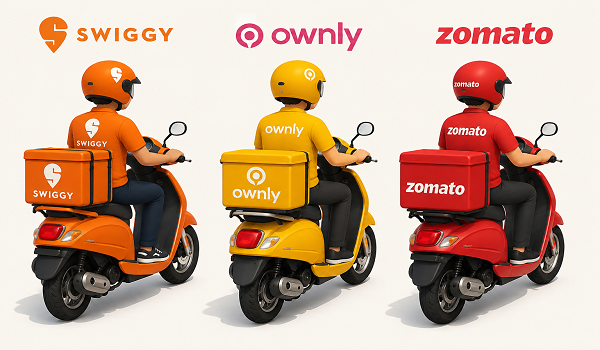
India’s food delivery market is seeing increased competition as newer platforms such as Ownly and magicpin step up efforts to attract restaurants and customers from established players Swiggy and Zomato.
Both platforms say restaurant participation and daily order volumes are increasing across major cities, as restaurants look for greater transparency and control over commissions, discounts and promotional campaigns.
Anshoo Sharma, founder and CEO of magicpin, said the platform has recorded growth across major cities, with increases in restaurant partnerships as well as daily orders. He said restaurants appreciate the transparency offered by the platform and that its growth has been supported by both restaurant partners and customers.
Ownly, backed by Rapido, is also focusing on improving economics for restaurant partners while increasing order volumes in its existing markets. Aravind Sanka, co-founder of Rapido and Ownly, said some restaurant partners are already receiving significant order volumes through the platform.
Ownly believes India’s food delivery market has room for more players because overall penetration remains relatively low. The company plans to strengthen its presence in existing markets before expanding to more cities.
The development comes as restaurants, particularly in Bengaluru, negotiate with Swiggy and Zomato over commercial terms and promotional practices. Restaurants had earlier threatened to disengage from the two platforms from August 15, but following discussions, the deadline has been extended to August 31.
Ananth Narayan, Bengaluru chapter head of the National Restaurant Association of India (NRAI), said discussions are continuing and expressed optimism that the parties could soon formalise the minutes of their meeting.
A key issue is restaurant control over discounts and promotional offers. Under a proposed system, restaurants would provide approval through an OTP-based SMS process before discounts and promotions are activated on a platform.
Restaurant representatives have raised concerns over discounts being offered without adequate approval and disputes related to refunds. They argue that restaurants need greater control over commercial terms to protect their margins.
The entry of more food delivery platforms could give restaurants greater negotiating power and increase competition over commissions, promotions and service quality.
However, newer platforms will also need to build sufficient order volumes, ensure reliable deliveries and encourage customers to use their services regularly if they are to compete with established players.
With restaurants demanding more control over pricing and promotions, the growing presence of alternative platforms could gradually change the competitive dynamics of India’s food delivery industry.