

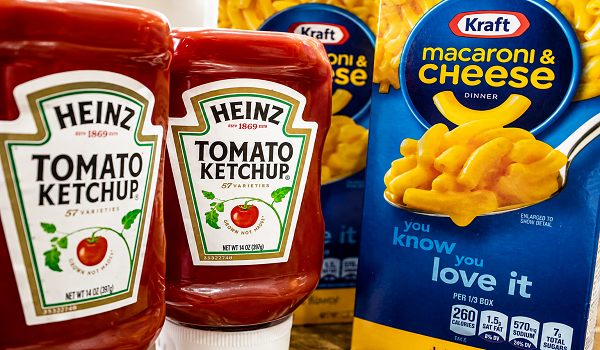
Kraft Heinz is turning to its biggest brands to reach consumers whose dietary restrictions and changing preferences have increasingly pushed them away from traditional packaged foods.
The food giant is expanding familiar products into categories such as lactose-free, gluten-free, plant-based and clean-label foods, betting that trusted brands can bring new consumers into its portfolio without sacrificing taste or affordability.
The strategy most recently surfaced with the launch of lactose-free Philadelphia cream cheese, aimed at the millions of U.S. consumers affected by lactose intolerance. The company says as many as 50 million Americans face the digestive condition, creating a significant opportunity for one of its best-known brands.
Philadelphia’s latest product follows a broader series of moves. Kraft Heinz has introduced a plant-based Philadelphia spread, gluten-free Velveeta Shells & Cheese and a plant-based Kraft Mac & Cheese. The company has also expanded into clean-label and nutrition-focused products, including Heinz Simply ketchup, Jell-O without artificial colors or sweeteners and Kraft Mac & Cheese with added protein.
Turning Familiar Brands Into Growth Engines
Rather than building entirely new brands, Kraft Heinz is increasingly modifying products that consumers already recognize and trust.
Jerome Drolet, the company’s president of taste elevation, said the company intends to aggressively pursue consumer trends where there are clear unmet needs. The potential is significant: Kraft Heinz generated roughly $25 billion in net sales in 2025.
The approach comes at a challenging moment for the packaged-food industry. Consumers have been cutting back on highly processed products and looking for foods perceived as healthier or more aligned with specific dietary needs. Inflation has added another layer of pressure, prompting shoppers to become more selective with their spending.
Kraft Heinz’s organic net sales declined 3.4% in 2025, although the decline moderated to 1.3% in the second quarter of 2026, suggesting the business may be beginning to stabilize.
The opportunity is straightforward: consumers who previously avoided Philadelphia because of lactose intolerance can now consider the brand for products such as bagels, frostings and other recipes.
For Kraft Heinz, the strategy is less about chasing every emerging food trend and more about identifying where its established brands have room to expand.
Before moving into a new category, the company evaluates whether a consumer trend is likely to last, whether one of its brands has a strong position in the space and whether enough consumers could be reached to justify the investment.
Waiting for the Right Product
Kraft Heinz is also betting that being first to market matters less than getting the product right.
The company points to its gluten-free Mac & Cheese as an example. Although Kraft Heinz entered the category in 2020 relatively late, it spent time developing a product designed to closely match the taste and quality of its traditional offering. The company says the product has since become the category’s top-selling gluten-free brand.
That philosophy reflects a broader challenge for food companies: consumers may be interested in labels such as “gluten-free,” “plant-based” or “clean-label,” but they are unlikely to compromise indefinitely on taste, price or convenience.
More Money behind Innovation
Kraft Heinz is now putting additional resources behind the strategy.
CEO Steve Cahillane recently announced plans to increase spending to $700 million from $600 million, directing additional investment toward marketing, sales and research and development. The goal is to improve product performance and return the company to growth.
Before Cahillane became CEO in January, Kraft Heinz had targeted $2 billion in incremental net sales by 2027 through portfolio innovation. Cahillane has argued that innovation had slowed because it lacked sufficient resources.
The company now appears to be reversing course, using investment in established brands as a central growth lever.
A Strategy Spreading Across the Food Industry
Kraft Heinz isn’t alone in adapting established brands to changing consumer demands. Other major food companies have introduced variations such as sugar-free Oreos, gluten-free soups and snacks without artificial colors and flavors.
Morningstar senior director of consumer equity research Erin Lash said leveraging established brands can be a sensible strategy because consumers already know and trust them.
But brand recognition alone won’t guarantee success. New products still need targeted marketing that clearly communicates why they are a better fit for the consumers Kraft Heinz is trying to reach.
For the food giant, the opportunity is increasingly clear: instead of asking consumers to change their habits to fit its products, Kraft Heinz is changing its products to fit the consumer.